The Heritage of Slow Food Preparation
British culinary traditions have long incorporated slow cooking methods. Sunday roasts, stews, casseroles, and bread-making represent cooking practices that extend across hours, requiring regular attention and engagement with ingredients. These methods emerged not from wellness ideology but from practical necessity—they developed in contexts where time and fuel efficiency required extended, low-temperature cooking.
Time as an Ingredient
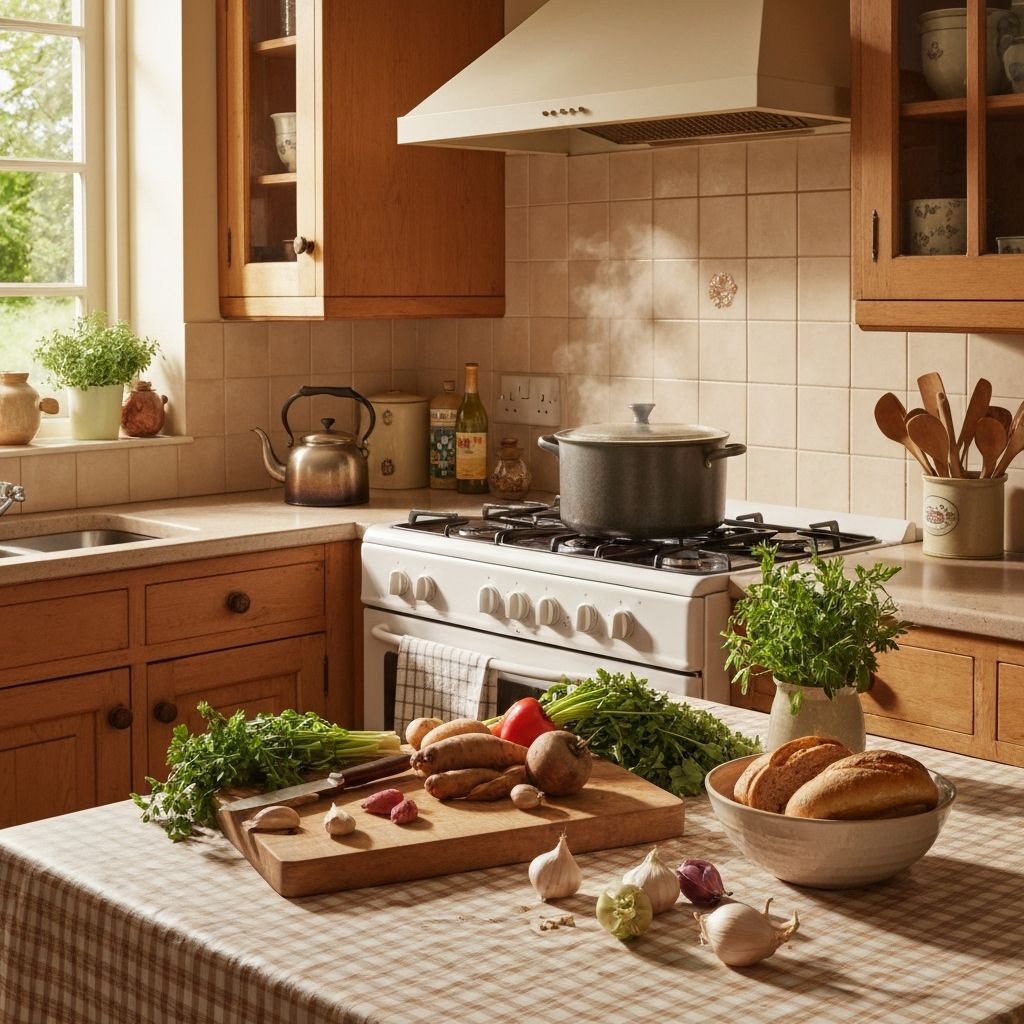
In slow cooking, time functions as a genuine ingredient. The lengthy cooking processes allow flavors to develop, textures to transform, and ingredients to integrate. This extended timeline naturally creates rhythm and pacing in kitchen work—checking on dishes, adjusting heat, observing gradual transformations.
The experience of slow cooking differs fundamentally from quick meal preparation. The extended timeline creates natural opportunities for attention and observation. Someone preparing a slow-roasted meal might check in periodically, notice aromas developing, observe ingredient changes—all activities that naturally support present-moment awareness.
Engagement and Attention in Traditional Methods
Slow cooking methods require—and naturally encourage—ongoing engagement with the cooking process. Bread-making involves multiple stages of observation and response to dough development. Stewing requires monitoring simmering, adjusting heat, and tasting to assess progress. This ongoing engagement contrasts with meals that can be assembled quickly and left mostly unattended.
This engagement isn't a hardship in slow cooking traditions; it forms part of what makes these cooking methods culturally significant. The act of tending to a slow-cooked meal has historically connected to care, attention to family needs, and ritualized food preparation in British domestic spaces.
Cultural Continuity and Food Traditions
Many British households maintain these traditional slow-cooking practices today, sometimes alongside modern rapid cooking methods. Families might reserve Sunday for roasting, make bread weekly, or prepare stews as comfort-food staples. These practices persist not primarily for functional efficiency—modern cooking has offered faster alternatives—but because they carry cultural meaning and are valued for their own sake.
Conscious Cooking and Traditional Methods
The contemporary interest in conscious cooking often overlaps with appreciation for traditional slow-cooking methods. Both emphasize engagement with the cooking process, sensory attention, and time as valuable in itself rather than something to minimize. Yet it's important to recognize that slow cooking practices developed independently of wellness frameworks—their capacity to support present-moment awareness emerged as a secondary quality of food preparation that happened to be culturally valuable for other reasons.
Accessibility and Personal Choice
While slow cooking methods can support mindful engagement, they're not essential for conscious cooking, and they're not equally accessible to all households. People's approaches to food preparation vary based on time availability, kitchen resources, cultural background, and personal preference. Slow cooking represents one way engagement with food can naturally develop—valuable to understand historically and culturally, but never a requirement for meaningful cooking experiences.
This article provides educational information about slow cooking traditions in British culture. It describes cultural practices and historical contexts rather than making recommendations about how anyone should cook. People's food preparation choices vary widely and legitimately based on individual circumstances and preferences.